Let me tell you a story.
In pre-independent Bharat, in 1935, in the small town of Bijapur (now Vijayapura), was born the third son of the Dixit family. The Dixits, though respected as Vaidik Brahmins, were not wealthy. His father, Shri Ananth Rao Dixit, was associated with the Congress, but as was often the case in those days, respect and recognition did not equate to financial security.
This third son—my grandfather, Lt. Annaji Ananth Dixit—was slow to speak in childhood, but by the grace of Bhausaheb Maharaj, his voice eventually blossomed. His early years were filled with struggle: some days he didn’t know where the next meal would come from. Yet, by virtue of being born into a Brahmin family, kind neighbors would offer him food out of reverence. Even as a child, life had already begun teaching him grit and endurance. He didn't grow up with privileges or silver spoons; he grew up learning the raw art of survival, carrying a cheerful innocence that no amount of hardship could ever snatch away from him.

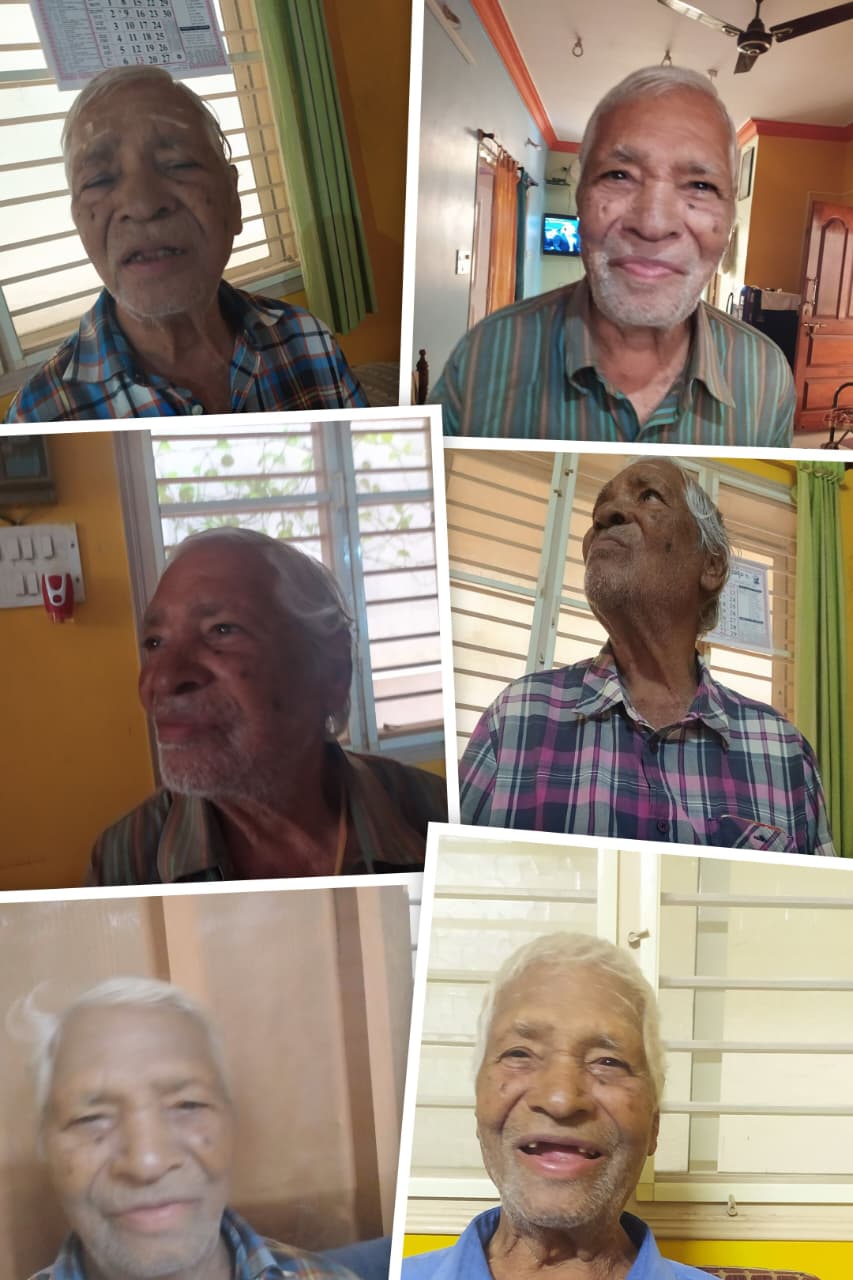
Ajju loved selfies. A man who embraced every moment of life with an open smile.
The Young Swayamsevak
In his youth, Annaji encountered the Rashtriya Swayamsevak Sangh (RSS) even before independence. Attending Shakhas then was not just about discipline—it was a silent yet powerful statement of resistance against the British, and a step towards unity among Hindus. The morning bugles, the physical exercises, the songs of patriotism—they lit a spark in his heart that never extinguished for the next nine decades.
He grew up amidst turbulent times: following Gandhi's assassination in 1948, Brahmin families across Maharashtra and Karnataka were targeted in waves of anger. For months, the Dixit family remained indoors, surviving in silence, hoping the storm of violence would pass. I did not know about his Sangh background until the last few years, when all of a sudden he started reciting "Namaste Sada Vatsale Matrubhoome" right in front of me! It hit me then that the discipline, the quiet stoicism, and the love for Bharat that I saw in him every day wasn't accidental—it was forged in the shakhas of pre-independence India.
Academics never came easy to Annaji, but sheer determination saw him through matriculation, even if it meant copying to scrape by. He had no illusions about his scholarly aptitude, but what he lacked in formal marks, he more than made up for in street-smart perseverance. He then trained in ITI and secured employment at Kirloskar in Harihara.
With stability came marriage—to Vanamala Deshpande, my Ajji, who became his lifelong partner in every hardship and joy. Together they raised four children with dignity, even in the face of economic struggle. Now, let me be completely candid here: Ajju was a proper movie buff by night and a hardworking father by day! In the small industrial town of Harihara, he would hop on his cycle and hit the cinema theatres 5 to 6 times a week. He loved the silver screen, the music, the drama, and the simple joy of escapism. At times, money was so tight that affording new clothes for festivals felt like moving mountains—he would borrow when needed, but he never let his children feel deprived during Deepavali or Ugadi. Together, my grandparents persevered, fought the odds, and ensured that all four of their children became graduates.

Joyful, resilient, and always smiling through life's hardest tests.
A Braveheart's Father
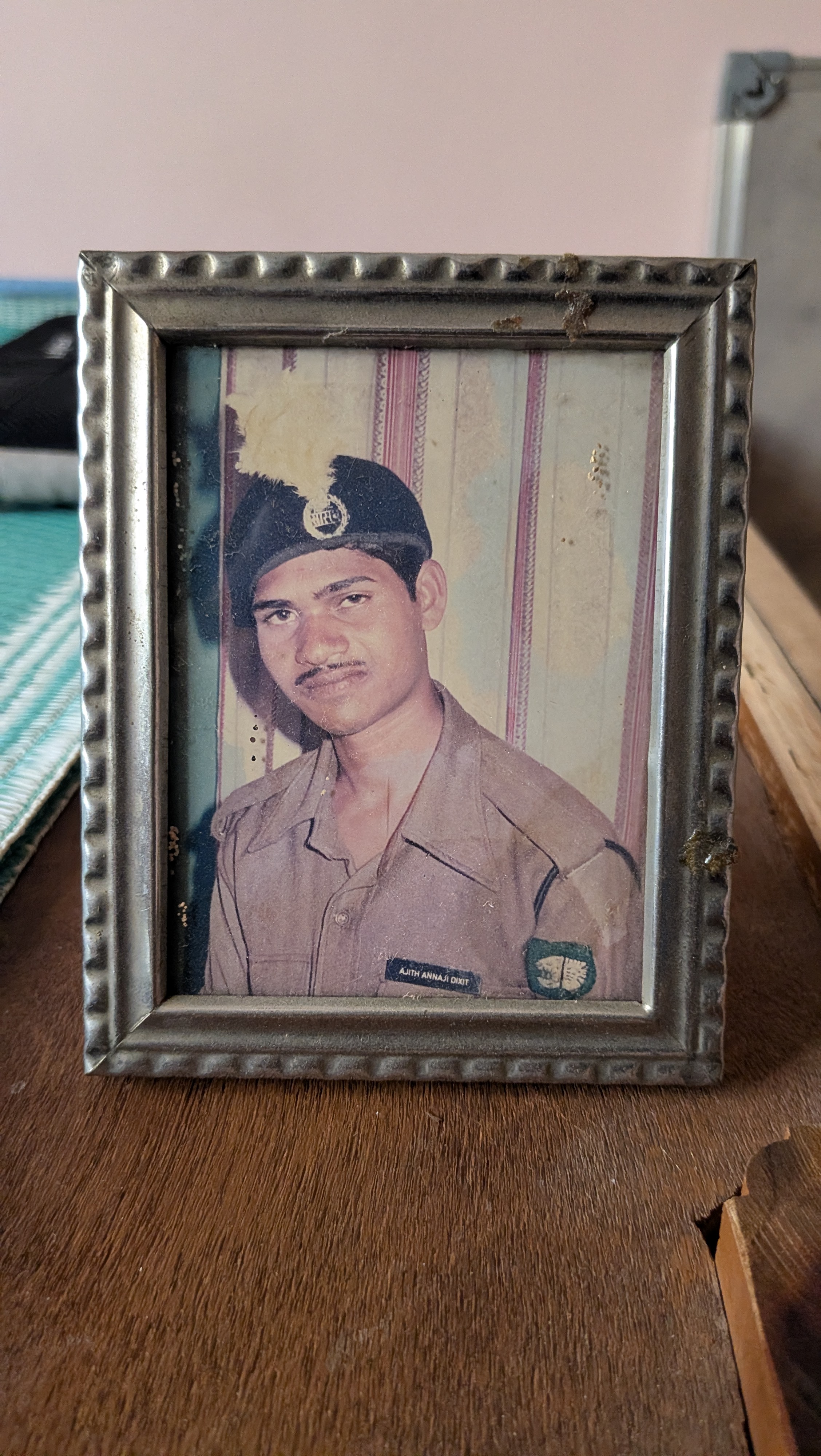
Two of Annaji's sons—Ajit and my father—dreamt of serving the nation in uniform. Ajit joined the Border Security Force (BSF), later excelling in commando training and qualifying for the Special Forces. My father initially joined the Army but stepped back, as the family felt one son's service was sacrifice enough.
Then, tragedy struck. In 1990, the family had newly settled in Bangalore when officers arrived at their doorstep with news that would break any parent:
Ajit Annaji Dixit had been martyred near Ayodhya, drowned in the sacred Sarayu river at the age of just 25.
My grandparents never saw his body—only his ashes, returned with honor, draped in the tri-color. Their world shattered. To this day, I cannot imagine the depth of that grief. A parent losing a son is unthinkable; to lose him in the prime of life, in service to the nation, is a wound that never truly heals. Yet, my Ajju and Ajji bore it with dignity. That resilience makes me bow my head before them every single day. I was not even born then, but I can still feel the pain they used to go through when something related to the Army or defense was being played on the TV.
Theirs was not just personal grief—it was a sacrifice that became part of Bharat Mata’s story. Imagine a young man, trained to defend his motherland with valor, never returning home, leaving behind only sacred ashes. Imagine two parents, watching their son depart in uniform with pride, only to welcome him back as a memory wrapped in the nation’s flag.
For my Ajju and Ajji, every sight of the Tiranga carried both reverence and piercing sorrow. Every Independence Day, every Republic Day, every news of soldiers at the border—it reopened wounds that never closed. Whenever a martial song played on Doordarshan or a news bulletin announced the loss of a jawan, Ajju would sit in silence. He wouldn't weep loudly, he wouldn't complain against God, and he certainly never turned bitter against the country. He carried that unbearable pain with a quiet, saint-like dignity, transforming their suffering into a symbol of strength.
Their son’s martyrdom was not just the loss of a life, it was the offering of an entire family’s peace at the altar of the nation. And still, my grandparents lived on, teaching us not to bow to despair but to rise with resilience. That is why, when I think of sacrifice, courage, and patriotism, I first think of Ajit the braveheart, and then of his parents—because they bore the heaviest weight any citizen can bear: the cost of freedom, paid in their own bloodline.

We remember with pride and love. The memories of our braveheart never fade.
My Bond With Ajju and Ajji
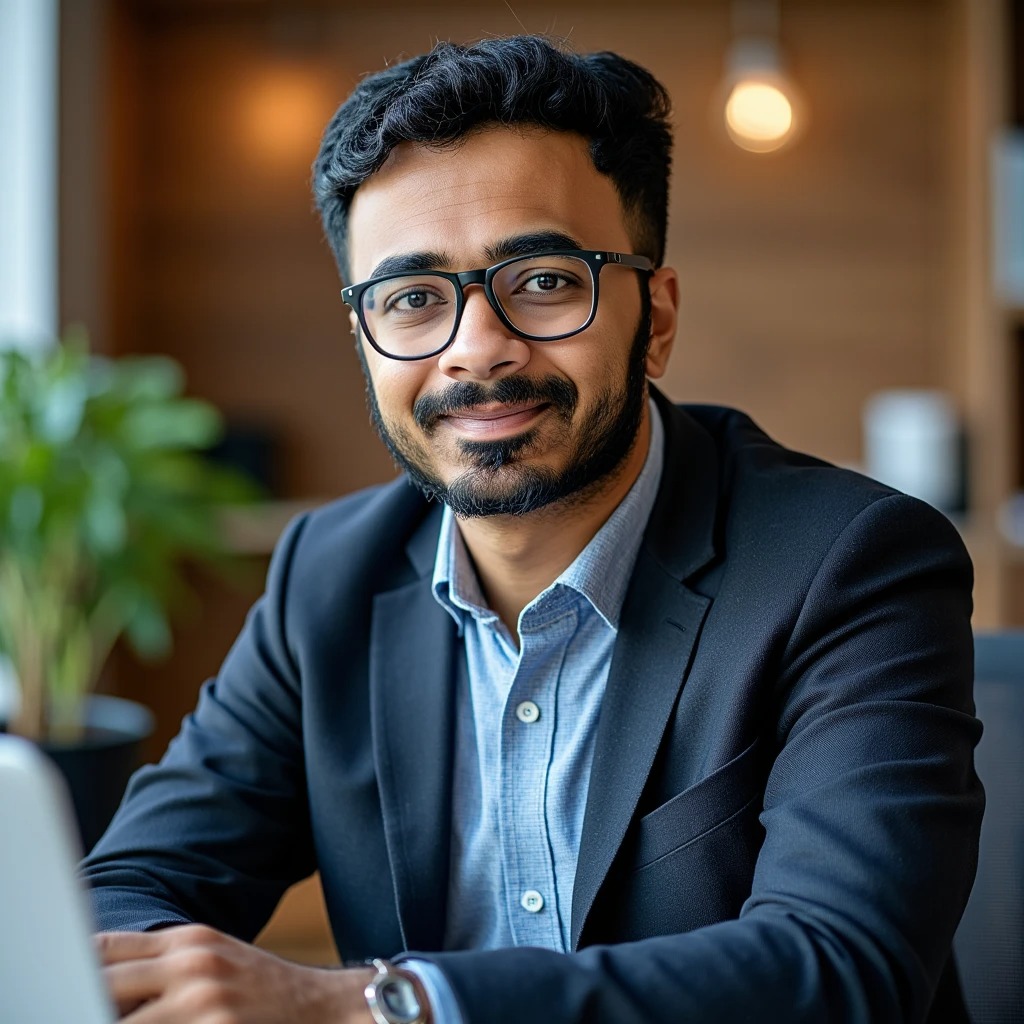
By the time I was born in 1998, their lives were interwoven with mine. They raised me with as much influence—if not more—than my own parents. Being a single child, my universe revolved around them.
- From Ajji, I learned values, culture, and moral courage. She was the anchor who gave me my spine.
- From Ajju, I experienced unconditional love, sacrifice, and the pure joy of companionship.
He was not just my grandfather—he was my best friend. The most active, patriotic, and fun-loving man I have ever known. Even well into his 80s, his enthusiasm put youngsters to shame. He was fascinated by modern technology. Whenever I got a new smartphone or worked on my laptop, he would sit beside me, curious and eager. And man, he LOVED selfies! Anywhere we went, anything we did, Ajju would say: "Baa, ondu photo thago" (Come, take a photo). He would flash his brightest, most genuine grin at the camera.
When Ajji passed away in 2019, Ajju’s heart broke. They had been together for sixty years—six decades of surviving poverty, raising children, burying a martyred son, and creating a life out of sheer grit. Watching the love of his life depart shattered something deep inside him.
Yet, even in old age, even in intense personal grief, he never complained, never faltered. His mental strength was boundless. He endured pain that would break most men—the loss of his wife, the eternal ache of his martyred son—and still remained a pillar of positivity and love in our home. He took every day in his stride, asking about my office, asking about my meals, and giving me his unshakeable blessing.
In the final year of his life, his health was declining, and hospital visits became frequent. But even from the hospital bed, his one big wish—something he had been manifesting for a long, long time—was to see his grandson settle down with a good partner. In April 2025, when my father found an alliance for me with Shreya (who was working in research at IISc), we literally had to prepone Ajju's discharge from the hospital so that the bride's family could visit our home. Ajju was right there with us in the living room, sitting with pride, meeting Shreya in person, and blessing us with all his heart. Knowing he met the person who would become my wife before he passed away is a blessing I will carry with me to my grave.
Lessons for Us All
The purpose of writing this is not to evoke pity. It is to remind everyone that caring for our elders is not a burden—it is a privilege.
In our fast-paced modern world, where corporate deadlines, social media dopamine, and personal ambitions consume us, we often treat the elderly as an afterthought. We forget that they are living libraries of resilience, courage, and unconditional love. No university course, no corporate leadership seminar, and no textbook can impart the life-lessons I gained simply by watching my Ajju face life's storms with unshakable dignity.
Ajju, I miss you, my man. I miss our banter, our tea-time chats, and your infectious laughter. I miss seeing your face light up every time the camera opened for a selfie. But I carry your spirit with me every single day, and I will always be proud to say:
- You were a father to a Braveheart.
- You were a husband to a remarkable woman.
- You were the strongest, most loving grandfather one could ever hope for.
Put some respect on his name. Always.

Forever in our hearts, Ajju.
I don't have many best friends, but Ajju, you were, you are, and you will always be my Best Friend.